Washington State University HomeWSU AdmissionsWSU CampusesWSU HomeWSU Search Tools*
edge graphic

Gardening In Western Washington
Presented by WSU Cooperative Extension


The Intensive Gardening Technique

This page contains links outside Washington State University which provide an option for finding further information.
No endorsement of products or information at these sites is implied.

Holly Kennell,   Community Horticulture Agent for Snohomish County
Regional Garden Column February 2005


Seed catalogs arrive in my mailbox almost daily and seed racks have popped up in stores, so it must be time to start thinking about planning my vegetable garden. For some of you, the question will be whether to grow a food garden. Homegrown produce tastes wonderful, but we have so many demands on our time.

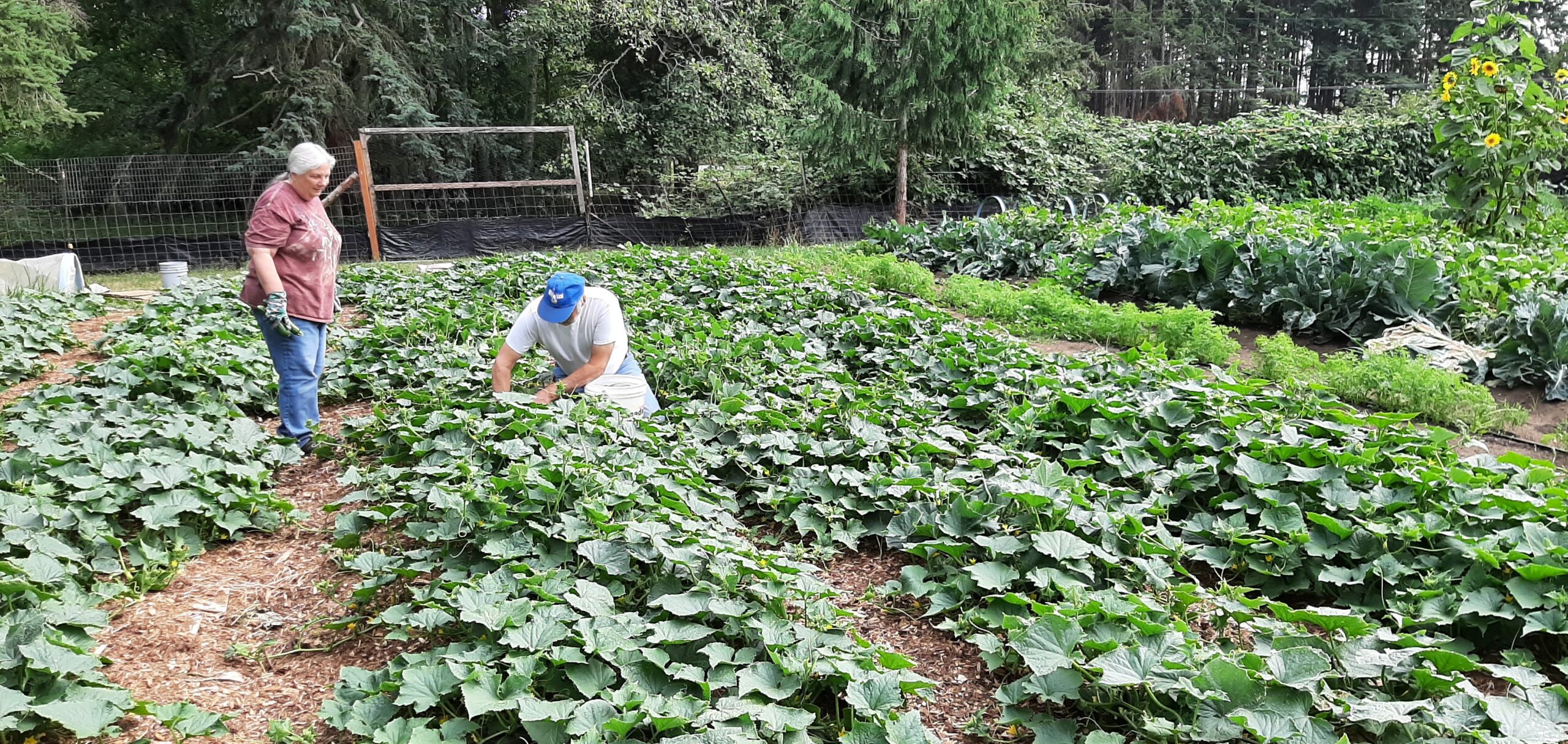
If you had trouble keeping up with the work of a big garden last year, I have some suggestions for you. Often gardeners can grow just as many vegetables in half the usual space by using intensive techniques. Once the soil preparation is done, half the space means half the amount of time for watering, weeding, etc.

Divide the space you want to plant vegetables into beds about 4 feet wide bounded by paths about 2 feet wide. Dig the planting beds deeply to loosen the soil. Do all the rest of your work from the paths, so the soil stays fluffy. Fork in a generous layer of compost and adequate fertilizer.

Then plant the beds as a block, not in rows. If the vegetable needs 10 inches between plants in a row, plant it 10 inches from any other plant in the bed. Think of it like putting cookie dough on a cookie-baking sheet; get as many into the space as you can without crowding them.

Here are four planting practices that will guarantee an abundant harvest, even from a small garden. They are all designed to use your space efficiently. Be sure to keep your crop rotation scheme in mind as you apply them.

Intercropping Intercrops are fast-growing crops (such as leaf lettuce, green onions, spinach, mustard or radishes) that can grow between large, slower plants (like squash, tomatoes or cabbage). Both crops are planted at the same time and the intercrop is harvested before the main crop needs its full space.

Vertical gardening Most gardeners with a small garden look for bush varieties of vining vegetables. You will get more production per square foot by using vining types, but trellising them up instead of allowing them to sprawl. Tall peas and beans grow up poles or a trellis with little work on your part. They will bear later than bush varieties, but will produce more.

Tie trailing cucumbers, squash and pumpkins to a sturdy frame or trellis. The vine will be able to support the fruit, in most cases. If you have a very heavy squash or pumpkin developing, a sling made from old pantyhose will make it extra secure.

I like to train my tomato vines up a pole or flat on a trellis too. By making the plants thin, they dry quickly after a rain and do not develop late blight disease as readily. This decreases the harvest per plant, but, since you can plant more plants per bed, you will probably harvest more, earlier and bigger fruit.

Successions The idea behind successions is simply to keep your garden space occupied. When the early lettuce, spinach or peas are done producing, plan for a second (or even third, in some cases) crop for that same space. Don’t let the left-over crop get tough or bitter or go to seed. Rip it out, turn in some compost and fertilizer and plant again.

Transplants We think about using transplants early in the season, but to get the most from a small garden, you need to use them constantly. Sow lettuce seed, for example, and you will be harvesting after 7-8 weeks. Plant out nice-sized lettuce transplants, and it will take only 4-5 weeks. This practice could get costly and it is hard to find good broccoli transplants in July, so grow your own.

Unlike spring transplant operations, which require a spot indoors with supplemental lighting, succession transplants are easy to grow. Just pick a handy corner of your garden and designate it a nursery bed. That couple of square feet may need tended daily, but will be an economical source for just what you need, when you need it.


Hortsense: Managing plant problems with Integrated Pest Management


navigational