|
|
|---|
Landscaping books suggest that vegetables be grown in the far back or side of the garden, preferably shielded from view by a fence or hedge. The vegetable garden has been equated with the garbage cans, compost bin and laundry line – functional, but ugly.
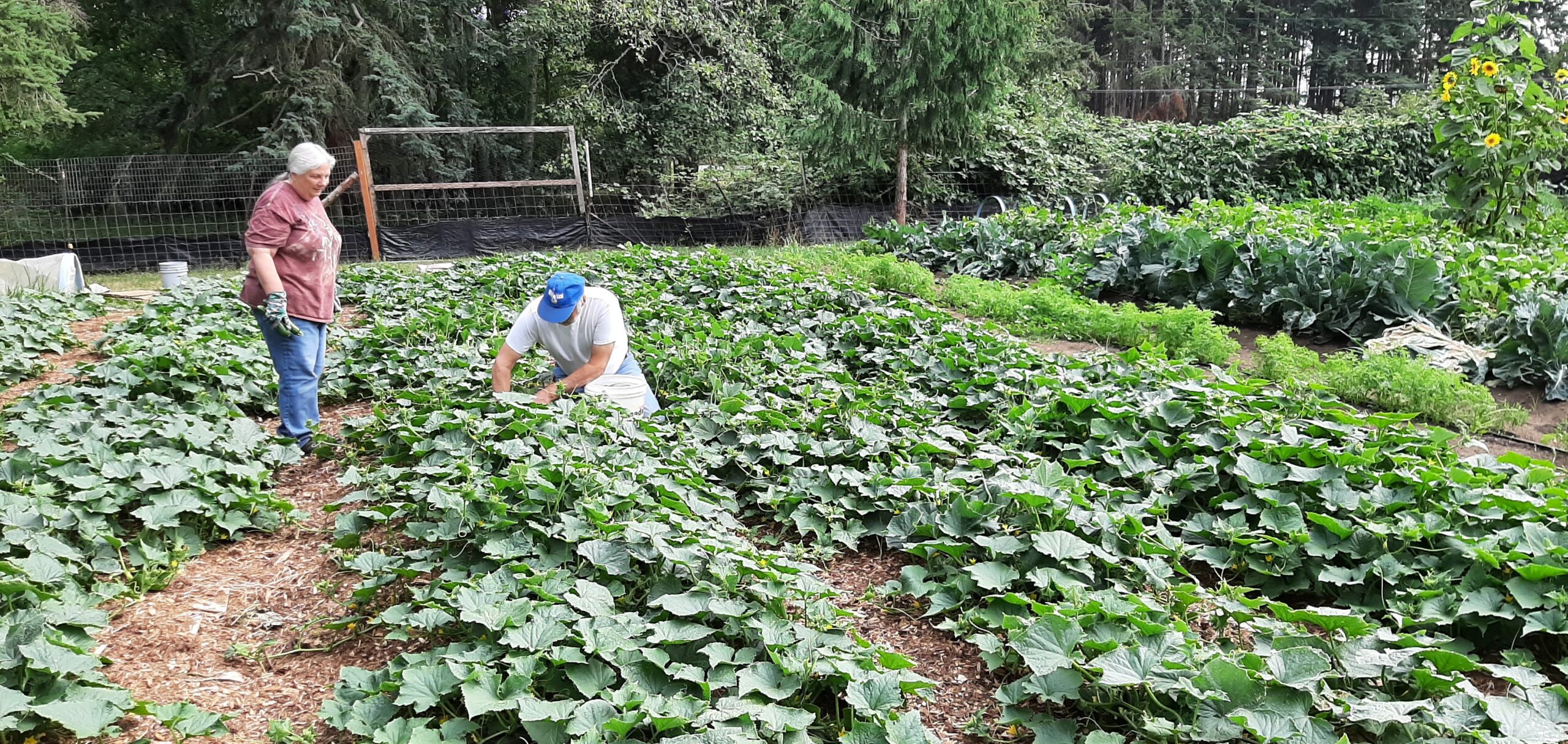
This may be because Americans usually grow vegetables in long rows. Their gardens mimic a farm field cultivated by a plow and that’s pretty boring. The more traditional way, world-wide, is to grow whatever you need together.
Historically, none but the very wealthy could afford big gardens of “useless” ornamentals. Most people had cottage gardens combining plants for food, flavoring, medicine, fiber, dyes, scent, etc. These gardens were useful as well as ornamental.
It is possible to make a totally edible ornamental garden. However, harvesting usually spoils the picture and the garden is not attractive in winter. Combining edibles with inedible ornamentals to give the beds structure works best.
Plant small vegetables and herbs in bays between shrubs or in front mixed with flowers. Tall vegetables (corn, sunflowers) or vines (squash, beans, tomatoes) trained on trellis can provide temporary privacy or shade. Fruit bushes often make nice shrubs for foundation plantings or mixed beds. Fruit and nut trees work as shade trees or some can be espaliered as a hedge.
You will need to take special care in selecting ornamentals. Don’t use those needing pesticides not labeled for edibles. Hopefully, the garden’s diversity will confuse the bugs and slow disease spread and it will attract birds and beneficial insects. Avoid ornamentals with toxic berries, since you will be growing edibles nearby.
Trees should have an open canopy for light penetration and deep roots that won’t mind soil disturbance or competition. The trees must be able to handle water and fertilizer (even in late summer, which may delay dormancy and thus reduce hardiness). Also they should not have shallow or aggressive roots (poplars, elms, big maples) or roots that sucker when disturbed (tree of-heaven, sassafras, sumac).
When placing plants, consider the compatibility of the plants’ needs. Most vegetables and herbs need sun. If you have semi-shade, try leafy greens and maybe root crops. Likewise, all vegetables, particularly shallow-rooted and young ones, need regular watering. Mediterranean herbs (sage, thyme, rosemary), figs, salal and Oregon grape are drought-tolerant edibles.
The soil should be fertile and have a neutral pH. Heath family ornamentals (Rhodies, azaleas, mountain laurel, Pieris, heather) require too acid a soil for most vegetables and have shallow, fibrous root system. They could work well with blueberries, lingonberry and salal.
To create a pleasing design, consider leaf size and texture; leaf and flower color; and plant size. Don’t plant in rows. Random plantings allow harvesting without spoiling your design, whereas picking from a row makes it look like a smile with a tooth missing.
Good trees for your mixed beds might include Amur maple, filbert, honey locust, Japanese snowbell, katsura and silk tree. Shrubs to consider include Juneberry, witch hazel, euonymous, Nandina, dwarf pines, rosemary and sage.
Akebia, grapes, honeysuckle, climbing roses, clematis and beans are vines that might be useful. Ajuga, dwarf phlox, dwarf Potentilla, Corsican mint, violets, strawberries, lingonberry and thyme are nice ground covers.
Choose perennial flowers with a long flower season such as beebalm, black-eyed Susan, campanula and coreopsis. Many annuals bloom all summer including alyssum, calendula, cosmos, larkspur, marigold, pansies, Scabiosa, snapdragons and zinnias. Mix in some bulbs like snowdrops, crocus, daffodils, grape hyacinths and iris.
Among the most useful edibles for the ornamental garden are vegetables with nice leaves like amaranth, cabbage, celery, edible chrysanthemum (shungiku), endive, escarole, kale, leeks, lettuce, mustard, bunching onion, parsley, rhubarb and Swiss chard. On the other hand, beets, broccoli, cauliflower and bulbing onions will be hard to use.
If you want to pursue this more deeply, Kate Rogers Gessert did trials at Oregon State. Her book, The Beautiful Food Garden, will tell you such things as which cultivar of carrot has the nicest foliage and which beans are the most ornamental.
Hortsense: Managing plant problems with Integrated Pest Management