Washington State University HomeWSU AdmissionsWSU CampusesWSU HomeWSU Search Tools*
edge graphic

Gardening In Western Washington
Presented by WSU Cooperative Extension


Plants Are Thirsty in Dry Summer

This page contains links outside Washington State University which provide an option for finding further information.
No endorsement of products or information at these sites is implied.

Mary Robson (Ret.) Area Extension Agent
Regional Garden Column July 30, 2000


Late July brought some relief from warmth, but in August we can count on hot days. Think of how often you reach for a glass of iced tea or a cold bottle of water when the temperature rises. This month plants similarly need moisture, though not daily as humans and other mammals do.

How can you determine when plants truly need watering? If the plant has begun to droop, it's expending more water than it's receiving. One definite warning sign is plants that look wilted in the early morning, after a cool night. Plants that didn't recover over night definitely need water. In my garden, perennial hellebores (Helleborus sp.) show signs of water stress by lying parallel to the ground instead of standing straight. Hellebores are ordinarily excellent "low water" plants, but these need more than the small amount received in July. Sea-Tac airport has recorded only .23 inch of water as of July 25, 2000, for the entire month. Less than 1/4 inch! Even crisper days have hit Olympia, which has shown less than .06 inches during July 2000. Normal rainfall for July is generally under one inch total for the entire month, but we are below that this summer.

Some plants, such as the perennial Ligularia dentata, collapse spectacularly in hot weather, the entire plant sliding down to the ground in an apparent faint. These plants normally require moist soils, and they will succumb to hot weather more than other plants. Other moisture-lovers are the perennial astilbe, all types of primroses, and Astrantia major. The most efficient way to water these is to set a soaker hose to provide a slow, deeply penetrating drip of moisture. Plants needing moisture should be grouped together in the garden to facilitate watering.

Other plants may not wilt but can but roll leaves inward into a cigar shape when too dry. (Rhododendrons will do this when either too dry or too cold.) A general lack of moisture may cause plants to show yellow leaves, or yellowing between green veins. This symptom indicates that there's too little water for the transport of necessary food resources. Plant nutrients must be taken into the roots in a solution of water; lack of water will keep the nutrients from penetrating. Don't put dry fertilizers on plants that will not be watered. At this time of year, stop fertilizing landscape plants so that they can start "hardening off" for winter. (Doesn't it seem weird to consider winter now?)

Keep fertilizing plants in containers, annuals in flower gardens, and vegetables in active growth. But when trees and shrubs stop growing vigorously, don't fertilize. Most landscape plants have completed their growth for the year by the end of July. You may even be noticing some leaves beginning to show tints of red as they mature.

When you do water, water slowly and deeply, using soaker hoses or other efficient irrigation devices. Avoid turning on sprinklers in full sun, because too much valuable, and costly, water evaporates when sprayed into warm air. Some research indicates that about 48% of water released from sprinklers into hot sun evaporates without getting to plant roots.

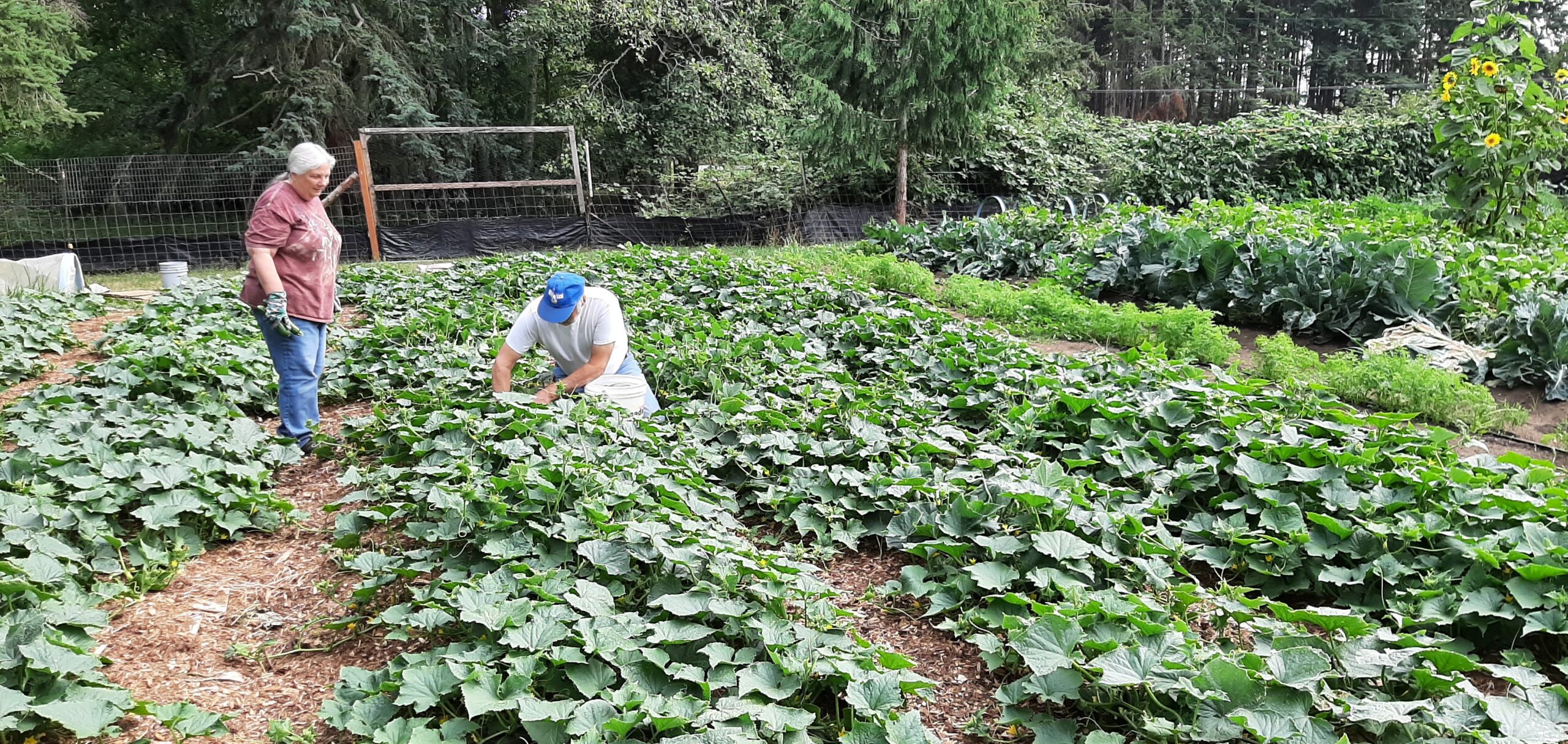
Don't neglect plants that have been moved during the past year, or newly installed landscapes. Some careful gardeners say that they water in hot weather according to "triage," choosing those plants with the most need. Container plants, new landscapes, new lawns, transplanted material, and vegetable gardens will all need thorough watering during the hot dry days of August. Check plants under eaves where they can often be suffering from drought.

Mature trees and shrubs often do well with little or no extra watering, even in the warmest weather. Toward the middle and end of August, plants begin to go dormant, slowly ceasing their growth and moving carbohydrates toward the roots for winter. Don't fertilize landscape plants after about the first of August, and reduce watering in late August and September.

Flowering bulbs need late-summer care. Lilies (true lilies, in the genus Lilium) that have finished blooming require time to ripen their foliage. If cutting lilies for flower arrangements, leave 2/3 of the existing stalk on the plant. This lets the lily replenish food reserves for next year's flowers. Lily bulbs make wonderful perennials, returning each summer and forming larger clumps yearly.

After gladiolus corms bloom, cut off the whole dead flowering stalk. Allow the leaves to grow and ripen naturally, gradually turning brown in the fall. This is , in general, a good rule for all perennials that have finished blooming: cut off the old flowers and allow the leaves to continue active growth.

Dahlias reach their peak of beauty and bloom in August and September. Never let them go completely dry to the point of wilting, and fertilize once a month during bloom with a balanced fertilizer such as a 5-10-10 ratio liquid fertilizer. (This means that out of 100 parts in the fertilizer, 5 are available nitrogen, 10 are phosphorous, and 10 are potassium.) Dahlias stop blooming if they wilt too often, and they take constant observation and weekly deep watering. Look at those green, succulent leaves and stems, full of water!

Care for strawberries this month. If the entire crop bore fruit in June and is now out of bloom, keep them watered this month because they are setting up fruit buds for next year. Fertilize the entire patch with 5-10-10 at the rate of about 3 pounds per 100 square feet of strawberry plants. Fall-bearing, or ever-bearing strawberries like 'Tristar' need monthly fertilizing and regular water until rains come. It's easy to neglect a patch of strawberries after harvest is over, but neglect now results in small or missing fruit next year.


Hortsense: Managing plant problems with Integrated Pest Management


navigational