Washington State University HomeWSU AdmissionsWSU CampusesWSU HomeWSU Search Tools*
edge graphic

Gardening In Western Washington
Presented by WSU Cooperative Extension

Harvesting Tips

by Holly S. Kennell, WSU Extension Agent

This page contains links outside Washington State University which provide an option for finding further information.
No endorsement of products or information at these sites is implied.

Mary Robson (Ret.) Area Extension Agent
Regional Garden Column Aug 3, 2003

It’s time to literally reap what we have sown. Like many other aspects of gardening, harvesting is a skill that must be learned. For some crops, when to pick is not exactly obvious. If you goof, you may wind up with fibrous, poor-quality produce, instead of tender flavorful ones. Let’s go through some common crops.

Beans
Harvest when they are young and the seeds are just beginning to bulge the sides. Pick beans every few days to keep production going.

Beets (and Turnips)
Most are best from 2-3 inches in diameter. Big roots may become woody.

Broccoli and Cauliflower
Harvest while the buds are tight. When they separate and bloom, You hav e waited too long. I’ve talked to gardeners who were disappointed with their broccoli or cauliflower this year. Instead of growing lots of leaves and then forming a big head, the young plants put on a tiny head and gave up. This “buttoning” is caused by stressed transplants. Avoid this by growing your own seedlings or buying transplants fresh from the greenhouse.

Cabbage
Heads are ready as soon as they size up and are firm. Cabbage can be left in the garden until you are ready to use it. To prevent splitting, grab the mature head and rotate it a quarter turn to break roots.

Carrots Start pulling when roots reach finger size.

Corn
This is a tricky one. First watch for the silks to turn dry and brown. The cobs should be plump and the husks should feel tight at the tip. (Try not to pull the husk back to peek.) When you do husk the cob, the kernels should be large, but still tender and exuding a milky juice when punctured by your fingernail.

Cucumbers
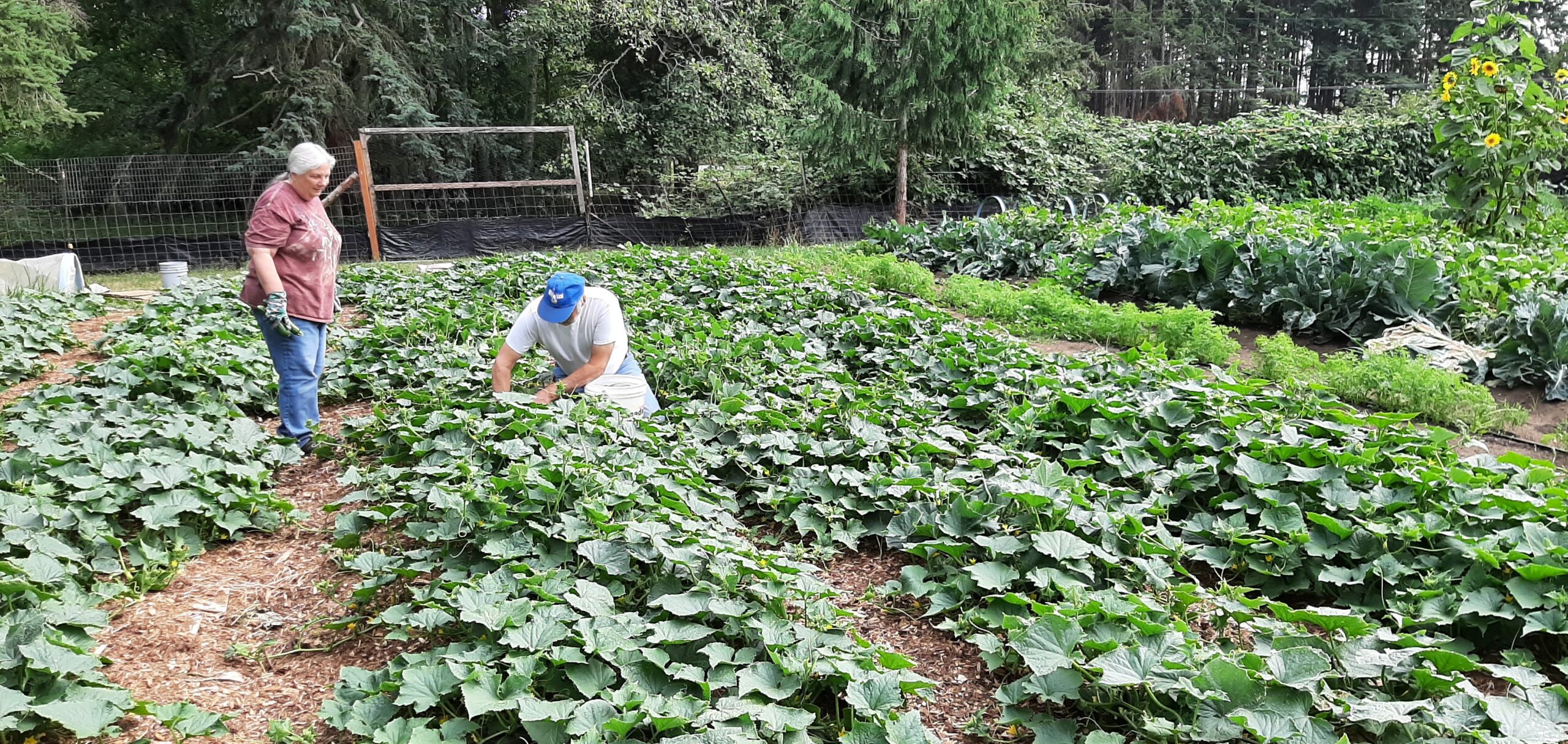
Harvest slicers at 6-8 inches, while the fruits are deep green and the seeds are still soft. Puffy, yellowish fruit is over-mature and will inhibit continued fruit production.

Lettuce
Start picking leaves as soon as they are large enough to use. When the plant’s center begins to elongate, it is going to flower. Remaining leaves will be bitter, so pull up the plants and quickly re-sow a fall lettuce crop.

Onions
Green onions can be pulled whenever they are big enough to use, but storage onions must mature properly or they rot quickly. As the tops start to fall over, push over the remaining ones and leave them for a week to dry. Dig the bulbs, wait until the outer scales are dry and then cut the tops back to 2 inches.

Peppers
Pick when they reach the desired size and color. Bell peppers will be sweeter and will have more vitamin C, if allowed to turn red.

Pumpkins and Winter Squash
Harvest when the skin is the proper color for the variety and you cannot easily pierce it with your fingernail. You can leave them until the vines die, but pick them before a hard frost. Leave a 2-inch stem on the fruit.

Radishes
Start pulling when they are about an inch in diameter. Don’t let them get too big or they get woody or pithy.

Summer Squash
Pick zucchini and other summer squash frequently to keep the plant productive. Tender baby squash with the blossoms still attached are a delicacy, but the fruit are delicious up to about 8 inches. As they get larger and the skin starts to get tough, they lose sweetness and flavor.

Tomatoes
For the best flavor let the fruits get a deep red before picking. I have seen many gardeners remove lots of leaves in the mistaken belief that the fruit need direct sun to ripen. Actually, they need these leaves to make the sugars that get transported to the fruit. In fact, removing foliage can cause the fruit to get sunburned. As the season winds down, remove the blossoms and pea-sized fruit, so that the plant can concentrate on ripening on the nearly mature fruits.


Hortsense: Managing plant problems with Integrated Pest Management


navigational