Washington State University HomeWSU AdmissionsWSU CampusesWSU HomeWSU Search Tools*
edge graphic

Gardening In Western Washington
Presented by WSU Cooperative Extension


Save Those Fallen Leaves and Make "Leaf Mold"

This page contains links outside Washington State University which provide an option for finding further information.
No endorsement of products or information at these sites is implied.

Mary Robson (Ret.) Area Extension Agent
Regional Garden Column October 29, 2000


Fall gives gardeners great opportunities to amend soil and use mulches. Taking care of soil by applying a mulch benefits the winter garden in many ways. Bare soil gets pounded, compacted, and washed away by winter rains. One good way to care for streams and lakes in western Washington is to prevent soil erosion during winter.

Mulches help with garden maintenance, too. Weed seeds can sprout throughout the winter, and gardeners who have fought chickweed and little bittercress in January experience real frustration. A mulch layer two to three inches thick block light from striking soil, and prevents germination for many annual weed seeds.

Apply mulches after weeding and transplanting or planting spring-blooming bulbs. They provide the finishing protective touch for the winter garden. Gardeners can choose from many different types of mulch, depending on the appearance desired and the function of the mulch.

Bark mulches come in various sizes; large chunks about half the size of the palm of a hand, medium bits, and fine bark. If you need weed control in a tree and shrub garden, the large bark chunks have been shown in research to keep weeds from sprouting because they don't offer enough fine surface area. However, the big bark chunks break down very slowly and don't suit flower and vegetable gardens where one of the purposes of mulch is to improve soil quality as it decomposes.

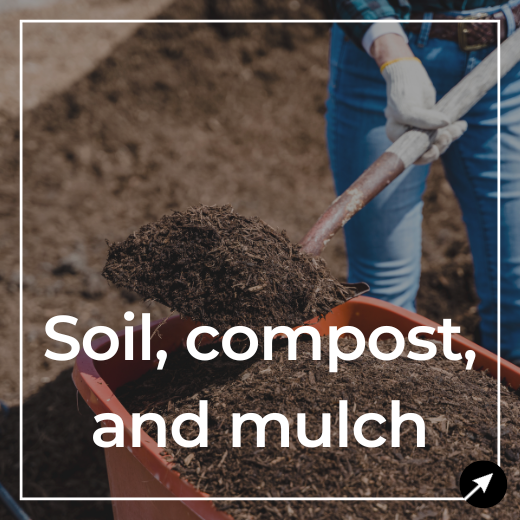
Other mulches with finer particles, such as commercial yard-waste composts and municipal biosolids like Tagro from Tacoma, work extremely well in both first-year weed prevention and gradual soil improvement. These mulches resemble crumbled chocolate cake and they enhance the flower and vegetable garden while breaking down to add humus to the soil. Two to three inches of these, or of home made compost, provide a good fall garden addition. They can certainly also be used for all landscape areas where mulch is desired.

Some mulches take time but are basically free. My favorite is made from fallen leaves, bagged and tucked away for six months or longer. "Leaf mold" is often mentioned by traditional garden writers as being a wonderful soil amendment for gardens. I suspect it was, decades ago, dug from the layer of fallen, decayed leaves in forests surrounding large estates. Troops of gardeners with wheelbarrows may have harvested it from the woods as part of their garden work.

"Leaf mold" is the brownish-black residue of leaves after weather, water, and time have worked on them. It's soft, crumbly, and the individual leaves aren't recognizable. The fragrance of leaf mold is pleasant and mild. It's composted leaves. Quite often leaves are added to compost piles, and the result is also brown, soft, and crumbly but contains grass and other ingredients in addition to leaves.

"Leaf mold" has to be home-grown, because it's not available commercially. (Again, commercial composts use a mixture of materials.)

Because the leaves contain very little nitrogen, and mostly carbon, when they fall, leaf mold breaks down rather slowly. You could create leaf mold by piling fallen leaves in a bin or wire enclosure, wetting them thoroughly, and covering the pile. After 6 to 12 months, the bottom of the pile will be useable leaf mold. Keeping it damp helps. Worms will move into the pile while it's working. The benefits of using it in a garden are essentially similar to the benefits of composted garden residues or commercial compost made from "clean green." Leaf mold will help soil hold water, and will improve soil structure.

For years, I've been composting fallen leaves inside plastic bags in the fall. Small leaves, such as Japanese maple, birch or alder, break down in about 6 months. Be sure they are damp or wet when filling the bag, tie it at the top, and poke some holes in the sides with a pitchfork for air circulation.

If your garden contains huge leaves, such as big leaf maple, or evergreen leaves, such as laurel, these compost better if they are shredded or chopped before being bagged. Making "leaf mold" is simply another method of composting a valuable landscape material. The result is a distinctly excellent soil amendment that recycles a natural resource into our gardens.


Hortsense: Managing plant problems with Integrated Pest Management


navigational