Washington State University HomeWSU AdmissionsWSU CampusesWSU HomeWSU Search Tools*
edge graphic

Gardening In Western Washington
Presented by WSU Cooperative Extension


What Does Lime Do in the Garden?

This page contains links outside Washington State University which provide an option for finding further information.
No endorsement of products or information at these sites is implied.

Mary Robson (Ret.), Area Extension Agent
Regional Garden Column, November 15, 1998


Have you wondered about lime use in western Washington? Late fall is a good time to lime soil, because of common amendments like dolomite limes take three to four months to break down. A vegetable garden limed in November will be ready for planting in March.

But does your garden need lime? To understand the role of lime in the garden, it's necessary to soil type in western Washington. People describe soils in general as acid or ("sour"), neutral, and alkaline ("sweet".) These familiar terms refer to the level of acidity in the soil. Chemically, they refer to the concentrations of either hydrogen ions (an acid soil) or hydroxyl ions (an alkaline soil). The pH scale runs from 0 to 14 with 7.0 considered "neutral." Lower numbers than 7.0 are considered acid, numbers higher than 7.0 are considered alkaline.

Garden books generally provide information on which plants or crops require acid or alkaline soil. Gardeners here in western Washington need to be able to translate this information so that it relates to local conditions. Most soils in western Washington are naturally acid, having pH levels reported from 4.0 to 7.0 on soil tests, which is quite a broad range. The most common readings from soil laboratories of soils in western Washington fall between 5.0, 6.0 and 6.5. A soil with a pH of 5.0 is ten times more acid than one with a pH of 6.0, 100 times more acid than a soil with a pH of 7.0 (This pH scale is logarithmic, like the Richter scale for earthquake intensity.)

Soils in western Washington develop acidity in part because wet conditions cause leaching of nutrients from the top layers of soil. Some of the nutrients washed down are the positive ions of calcium, magnesium, and potassium that help to raise the soil pH. As these ions are removed, they are replaced by hydrogen and aluminum which increase soil acidity. Many of you may have lived in arid sections of the American West where the soil is distinctly alkaline.

High pH levels also tend to occur where the native rock is calcium-rich limestone (think of the "white cliffs of Dover"). Native rock in western Washington isn't limestone. Growing plants also remove calcium and magnesium from the soil. Also, continuous application of some forms of nitrogen fertilizers can increase soil acidity: ammonium sulfate, ammonium nitrate, and urea are all common sources of nitrogen that tend to increase acid-forming hydrogen ions in the soil.

Soil that is between about 6.0 and 7.5 has some real advantages for plants. Higher levels of nutrients are available to be accessed by roots. Plants need mineral elements like nitrogen, phosphorous, and potassium, which are used in larger amounts than other minerals and are called "primary nutrients." Next in importance are calcium, magnesium, and sulfur. Trace elements like copper, zinc, and iron are also needed. In general, the pH levels between 6.0 and 7.5 provide the broadest availability of nutrients. If the pH gets too high or too low, nutrient availability drops. Soil microbes are also active at these pH levels. These microbes contribute to plant health by digesting nutrients and converting them into forms that can be taken up by root cells.

So where does the average gardener go with this information? No action may be needed.

Landscape trees and shrubs: If the landscape consists mainly of shrubs and trees that are growing satisfactorily, there may be no concern necessary about liming soil. Many of our preferred tree and shrub plants in western Washington, such as conifers, rhododendrons, azaleas, heathers, and pieris must have acid soils to thrive best. Thus they grow well without additional lime. My front garden landscape, with vine maple, yew, strawberry tree (Arbutus unedo) and ferns has not been limed in 15 years and puts out normal growth yearly.

Lawns: What about the lawn? No lime may be needed. Turf grasses prefer pH between 5.5 and 7.0; quite often, turf grows well in western Washington without liming if other nutrients are supplied by a regular fertilizing program. Late November is time for the last application of fertilizer to the lawn, using a 3-1-2 formulation (3 parts nitrogen, 1 part phosphorous, and 2 parts potassium.) When installing a new lawn, get a soil test done to establish the pH level and add lime before planting if necessary, if the soil pH is below about 5.5. Do not apply lime and fertilizer at the same time. Lime should go on first: wait at least 30 days after applying lime before fertilizing.

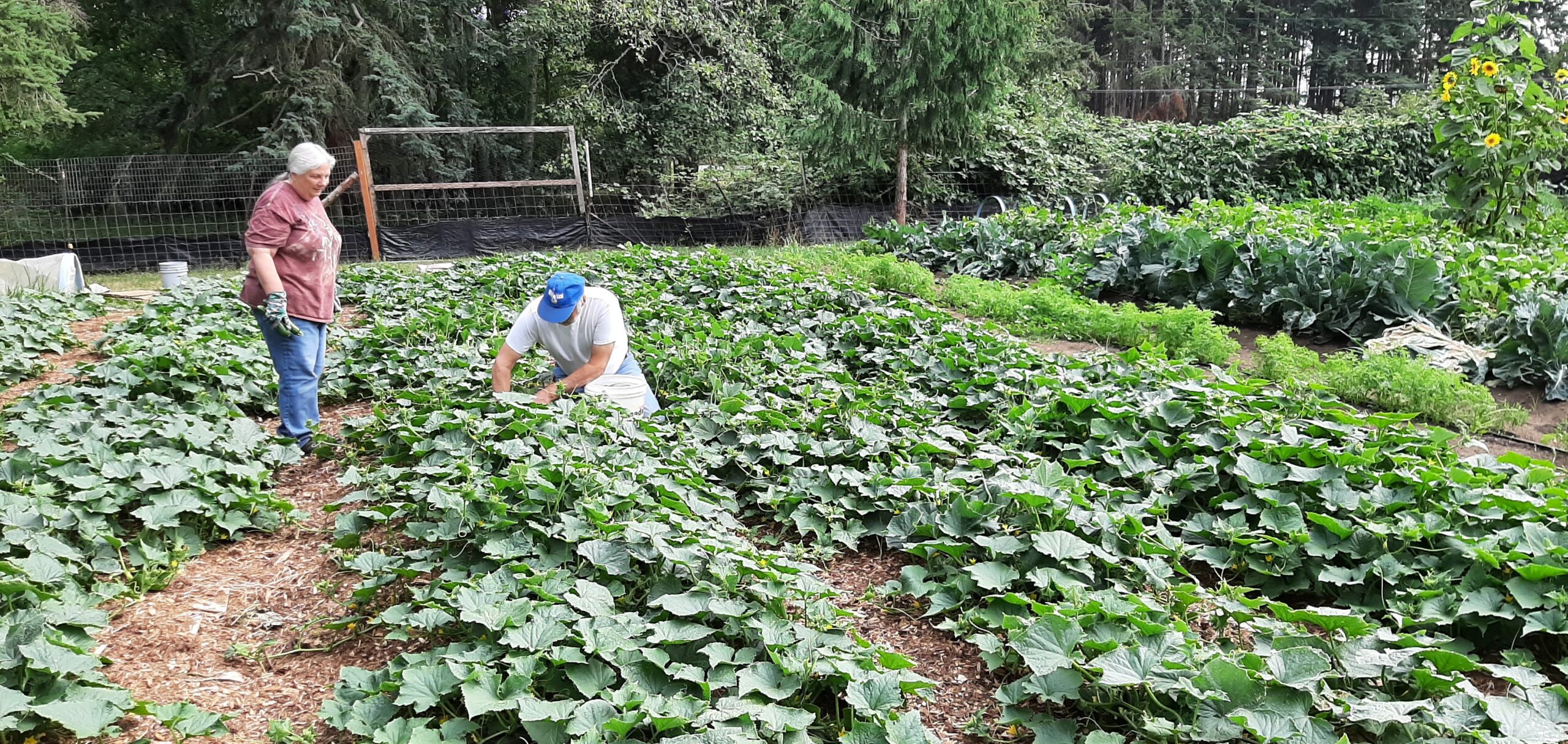
Vegetable gardens: Vegetables produce the best crops at soil pH between 6.0-7.0. Vegetable gardeners do need to add lime to their soils because these pH levels are seldom naturally present in the maritime Northwest. The exact amount of lime to add depends on the pH of the soil. A rough estimate for a garden that hasn't been previously limed would be: per 100 square feet of garden: sandy soil, 4 pounds every 2 years; loamy soil, 6 pounds every 2 years; clay soil, 8 pounds every 3 years. Dolomite lime is most often used because it supplies magnesium as well as calcium. Add it in late fall after crops are harvested to prepare soil for planting the following spring.

Soil testing: When testing only the soil pH, it's possible to use a kit from a garden center. Be sure that all ingredients in it are fresh. If you wish more complete soil testing, local WSU Extension offices have bulletins on how to find a test facility. Soil testing is no longer provided by WSU or Oregon State because of budget cutbacks. Call WSU Extension in King County at 206-296-3900 to request ANR Factsheet #508 "Soil Testing Labs." You can also request Community Horticulture Factsheet #6 "Soil Improvement," which lists lime requirements for vegetable gardens.

Other WSU Extension offices will also have information on liming but may have different bulletin numbers. In Snohomish County, call 524-357-6010 between 10am and 2pm. In Pierce County, call 253-798-7170 between 9am and 3pm.


Hortsense: Managing plant problems with Integrated Pest Management


navigational