| |
|---|
March is the month that gardeners become eager to start planting.
You can dig up and work your soil as soon as it is dry enough.
With sandy soils you can start whenever you like, but test clay
or silty soil to see if it is dry enough.
Squeeze a handful of soil into a ball in your palm. If the lump falls apart easily when you tap it, it's ready. If it dents but holds together when you tap it, let it dry out some more. Working wet soil will hurt its structure and make clods that will dry like bricks.
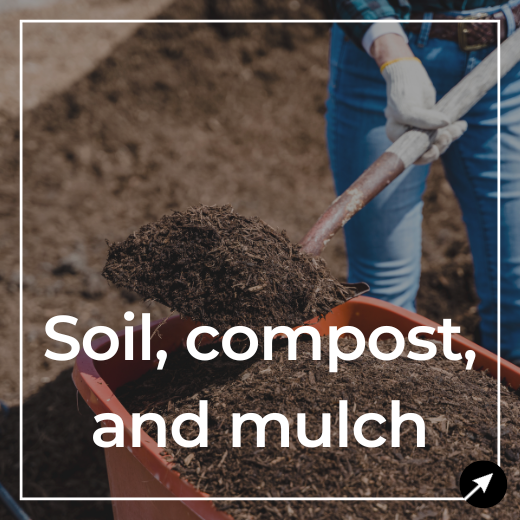
When you work your soil, add organic matter and fertilizer, as well as lime, if needed. Compost, manure, peat moss, grass clippings and aged sawdust are the kinds of organic matter that will help build your soil. Add as much as you can now and keep digging it in through the season. If you have a very sandy, or a heavy clay soil, organic matter is your best friend. It will improve the worst soil and make an average soil a joy to work.
For the fertilizer, use whatever you have or can buy inexpensively. The three numbers (15-10-10 or 6-10-7) on any fertilizer package give the percentages of nitrogen, phosphate and potash. Make sure your fertilizer has some of all of these elements. You could start with about three pounds (pints) of 5-10-10 per 100 square feet. If your fertilizer is stronger (10-20-20), use less.
Don't forget to add lime. It's best to apply lime when the soil is as dry as possible, allowing it to be mixed in well. Ideally, lime the soil in the fall. It will have adjusted the pH by spring planting time. Most veggies (potatoes are the exception) would prefer a pH between 6.5 and 7.0. Because of our leaching rains, our soils in Western Washington are naturally acidic, so additions of lime are essential. A soil test will give you specific recommendations. General guidelines are: for every 100 square feet of sandy soil--4 pounds, loam--6 pounds, clay-like soil--8 pounds. Reapply lime every 2 years (3 years for clay soil).
If you aren't gardening in permanent beds, maybe it's time to start. Look at your space, plan the layout and then do what you can. The double-digging will take time and effort, so don't feel you have to do your whole garden at once. Do one or two beds this spring and more in the summer or fall as crops mature.
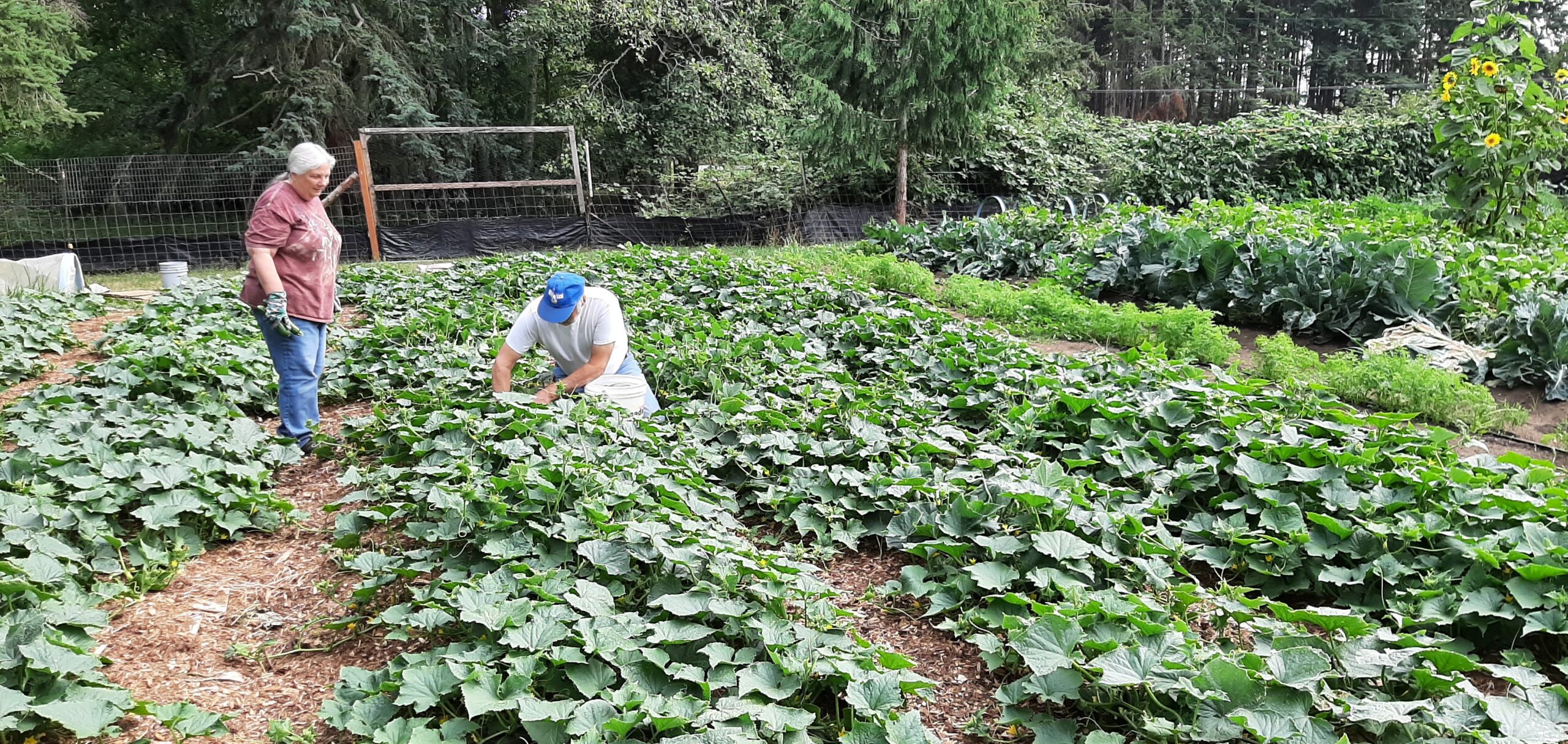
Raised beds are 2-5 feet wide growing areas. (Use a 2 foot width for beds along a fence or wall and 3-3 1/2 feet if you garden with children or have limited mobility. Use 5 feet only if you are tall or able to stretch and want to maximize production.) Plant your crops in large blocks, without foot paths between each row of crops. Paths on each side of the raised beds let you reach the middle of the bed to plant, weed or harvest without stepping on the soil around plantings. In raised beds, the space normally left between rows for foot paths can be planted with more crops. Orient the beds north-south for the best exposure to the sun.
Why Garden In Raised Beds?
You can grow more food in less space using raised beds. Provided you do deep soil preparation, you can plant crops very intensively. If a seed packet says "plant 10 inches apart in the row and 24 inches between rows," you can put the plants 10 inches apart in every direction in the raised bed.
Digging is easier in raised bed gardens, because the soil is not walked on and doesn't become compacted.
Growing seasons are longer using raised beds because they drain better and warm up quicker. Crops will grow better in late fall, early spring and through the winter.
How are raised beds raised?
When digging a raised bed garden, outline the paths and bed areas with stakes and string. Only the planting areas are worked. Paths are left undug. The difference between the loosened soil in the beds and the compacted foot paths makes the beds "raised"; wood frames are optional.
Skim off 2-4 inches of topsoil from your paths and add it to the planting area. The deeper your topsoil is in the beds, the better your crops will grow. Addition of organic materials such as compost raises the beds even more.
Raised beds can be dug with a garden fork or shovel. Double dig your beds for best production with closely spaced crops. Double digging involves removing the top layer of soil, so that the next layer can be loosened. Double digging further improves drainage, nutrient availability and plant growth.
For more information contact your local WSU Extension Office.